how to stretch your feet

>> Thursday, December 4, 2008

You might not think of your feet as a part of the body in need of stretching, but in fact, a stretch can really help your feet stay fit.

The muscles in your feet have a close relationship with those in your legs: Pain in the leg muscles makes it hard for foot muscles to (comfortably) do their job, and vice versa. Also, many stretching exercises benefit both the feet and the lower legs. Rochelle Rice Cutro, a New York City exercise instructor and creator of a fitness lifestyle program called "In Fitness and In Health," suggests these stretches for this stressed-out area of the body.

Note: These exercises are best practiced at home, but see the previous page for easy stretches you can do while sitting behind a desk. Lunge: From a standing position, with your feet together and toes pointing forward,

"lunge" forward with your right foot. Keep your knees bent and your chest up as you lunge. Be sure your right heel strikes the floor before the rest of the foot. And be sure that you keep your right knee aligned above your right ankle; do not bend your right knee so far that it extends forward beyond the ankle. Return to the normal standing position. Repeat 11 more times; then lunge 12 times with the left foot. To increase the intensity of this stretch, do lunges onto a step or small platform.

Tendon Stretch: Stand with both feet on a step or a phone book, with your heels extending beyond the edge of the step. You may want to hold onto something to keep your balance as you shift your weight toward your heels and gently stretch the muscles and tendons in the back your lower leg.

Towel Lift: Sit on the floor with your legs extended in front of you. Bend your left knee and put your left foot flat on the floor. Place a towel around your right ankle. Grasping the ends of the towel, use it to pull your right leg up. Keep your right leg straight and keep your buttocks on the floor as you do so. Hold the stretch for several seconds; then lower your leg to the floor. Repeat with the left leg.

"V" Stretch: Sit on the floor and place your legs out in front of you in a "V" shape. Turn your torso to the right and place your hands on the floor -- one hand on either side of your right thigh. Roll your left hip and your left toes inward, so that the inside of your left foot is resting on the floor and the toes of your left foot are pointing toward your right leg. You should feel a stretch in the inner side of your left thigh. Release the stretch, and then repeat the exercise in the opposite direction, with your hands next to your left thigh and your torso turned to the left.

Knee Hug: Sit on the floor with your legs out in front of you. Cross your right leg over your left, with your right knee bent. Hug your right leg to your chest. After putting your right leg back on the floor, cross your left leg over and repeat the hug.

Quad Stretch: Stand behind a chair with your left hand on the back of the chair to help you maintain your balance. Bend your right knee, raise your right foot up behind you, and grasp the right foot with your right hand. Gently pull upward on the foot until it reaches the buttocks. Hold it there for several seconds. You should feel a stretch in the large muscle at the front of your thigh. (Do not arch your back as you do this exercise.) Place your right foot back on the floor, and repeat the stretch with the left foot.

Crouch: Stand in front of a stable chair and hold your arms straight out in front of you (parallel to the floor). Gradually begin to sit down -- but stop before your buttocks touch the chair. Your weight should be on your heels; your arms should help you maintain your balance. Stand up again slowly and repeat. Rest, then do another two sets.

Towel Scrunch: Sit on a chair and place your bare feet on the floor. Pretend you have a towel under your toes; draw the towel in toward your heels by scrunching your toes. Then reverse the exercise by using your toes to push the imaginary towel out and away from the heel. Do this ten times with each foot.

Towel Scoop: Sit on a chair and place your bare feet on the floor. Use the outer part of your foot to scoop the imaginary towel in toward your arches. Then use the inner part of your foot to smooth the towel back out. Do this ten times with each foot.


Warning!As you do these exercises, remember to stretch only to the point of mild tension, not to the point of pain. Also, do not bounce when performing the exercises. Use a slow, steady movement.

All this stretching may have you feeling like a workout, and it's important to take care of your feet while exercising, too.

Read more...

how to re energize your feet

During the course of a day, your feet, like the rest of your body, gradually lose steam. But with the exercises below, you can learn how to re-energize your feet even when you're seated at a desk, at home in front of the television, in class, or on an airplane, train, or bus. In any of these situations, you can do at least one, if not all, of the following pick-me-ups designed especially for feet that do not get to move around much throughout the day. Each of these exercises should be done while you are seated.

Foot Relaxer: Start by relaxing and loosening the muscles and joints of your feet by shaking them (the same way you'd shake out cramped muscles in your fingers and hands). Then wiggle your toes, first on one foot, then the other.

Foot Press: With your feet on the floor, take your shoes off and place one foot on top of the other. Press the top one down toward the floor while pulling up with the bottom foot -- but don't let your feet separate. This can be a little tricky!

Toe Tap: With your feet on the floor, tap your toes, or pretend that you're pressing down on a pedal, first with one foot, then with the other foot. Toe Writing: With your feet on the floor and your shoes off, use your toes to "write" the letters of the alphabet, from A to Z, on the floor.

The Grip: With your feet on the floor and your shoes off, try picking up a pencil or pen with your toes. Or try picking up a marble (if you happen to have one lying around).

Page Rippler: With your feet on the floor and your shoes off, place a phone book under your feet, with its binding facing your body. Curl your toes over the far edge and try to ripple the pages.Once you have revitalized your feet with these seated exercises, you might want to massage your feet a bit. It's a great way to cap off your mini foot workout. See the foot massage page in this article for tips, or try the suggestions below.

Roller Massage: If you're sitting at home with your shoes off, place a rolling pin under one foot. Roll back and forth on the pin with that foot; then do the same with the other foot. This is a way of giving yourself a foot massage without pulling your feet into your lap or getting down on the floor. If you like this, you might even take a rolling pin to the office; then, several times throughout the day, take your shoes off and "roll" the tension out of your feet. This "roller massage" will also work with a tall, narrow bottle. Some people use smaller "rollers" including golf balls and even marbles.

Flex and Point: Try this at home or at the office if there's a way you can prop your legs up so that they're facing straight out in front of you and are parallel to the floor. (In the office, you might prop them on a high stool or another chair; if you're sitting on the couch at home, use the coffee table.) Point your toes forward, like a ballerina pointing her extended foot, and hold that position for 15 seconds. Then relax your toes and reposition your feet so that your toes are pointing toward the ceiling. Repeat this routine -- flex and point ahead of you, then relax and point to the ceiling -- ten times.

Curl and Turn: With your legs propped up in front of you and parallel to the floor, curl your toes, and then (keeping your heels on the surface where they're propped) turn your feet inward. Hold this position for five seconds. Then allow your toes and feet to return to their former, relaxed position.


Purse Lift: [For women] With your back pressed straight against the back of the chair, drape the strap of your purse over one foot. Keeping your knee bent, raise your foot until the purse hangs suspended in the air. Hold that position as long as you can, then lower your foot. Switch the purse to the other foot and repeat the exercise.

Read more...

how to care for your feet !!! ever needed


­­You may not think about your feet that often -- way down there at the ends of your legs -- but they're an essential part of almost everything you do. Whether walking, running, exercising, or just standing, having feet that are comfortable and well-cared for (rather than aching or in pain) makes the experience must more pleasant. Therefore, knowing how to care for your feet is key.And, this isn't just about feeling good. When your feet don't get the attention they need, chronic problems can develop, which may trouble you for years to come. In many cases, there are some simple stretches and exercises that can help keep your feet in top form. This article will introduce you to these ideas, as well as provide you with valuable guidelines that will make you an expert shoe-shopper -- able to select supportive, comfortable shoes (in the correct size) every time.
However, there are some situations when caring for your feet on your own is not advised. When serious injury occurs or an emergency arises, you should visit a podiatrist -- or even the emergency room. People who have ongoing circulation problems or diabetes should also consult a doctor where any foot problems are concerned. Here's why: Circulation problems are often associated with older feet, but the fact is that anyone can have such problems. When there's not enough blood flowing to your feet, you may experience tingling, numbness, cramping, and discoloration of the skin and toenails. Everyday circumstances can restrict blood flow: when feet get cold outdoors or in cold water; when shoes, stockings, or undergarments are too tight; even when you've sat too long with your legs crossed. Smoking reduces circulation to all parts of the body, as does drinking too much coffee or caffeinated soda (both nicotine and caffeine constrict blood vessels). And if you are under severe stress, your nerves can constrict your small blood vessels, lessening their ability to carry blood. Some nervous brides and grooms really do have "cold feet"!
Body Care Tips
Skin Care Tips
­Cure Bad Breath
5 Foods for Beautiful Skin
­ Other people have ongoing medical conditions, such as diabetes, that cause sluggish circulation. In addition, for most of us, a cut or blister is an annoying but relatively minor foot problem. For a diabetic, these "little" wounds can have serious consequences. Diabetics' feet are at two general disadvantages that can lead to specific, serious foot problems. In addition to reduced circulation, a loss of feeling in the foot, called neuropathy, can prevent diabetics from feeling the small aches and pains that normally signal to us that we've been cut or bruised. As a result, minor problems can go unnoticed and untreated, and infection may develop.
One of the best ways to avoid trouble with your feet is to exercise preventive care

Read more...

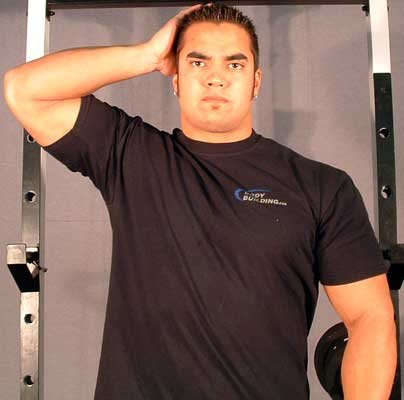
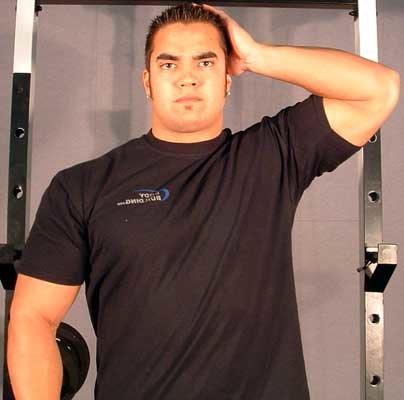
Isometric Neck Exercise - Sides

>> Friday, November 14, 2008

Isometric Neck Exercise - Sides

Exercise Data
Main Muscle Worked: Neck
Other Muscles Worked: None
Equipment: BodyOnly
Mechanics Type: Isolation

Video Guide: Windows Media - MPEG - Video iPod

Tips: You can perform this exercise seated or standing. Place your head and neck in a neutral position. Place both your left hand on the on the left side of your head and gently push for the required number of seconds on your workout. Resist any movement of your head by "isometrically" contracting your neck muscles. Repeat with your right hand on the right side of your head. This is an excellent way to strengthen your neck muscles with minimal risk of injury. Can also be done on the front and back of the head.

Read more...

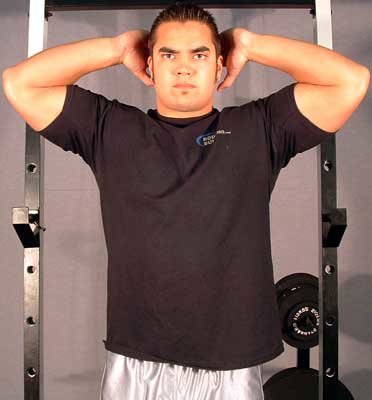
Isometric Neck Exercise - Front And Back

Isometric Neck Exercise - Front And Back

Exercise Data
Main Muscle Worked: Neck
Other Muscles Worked: None
Equipment: BodyOnly
Mechanics Type: Isolation

Video Guide: Windows Media - MPEG - Video iPod

Tips: You can perform this exercise seated or standing. Place your head and neck in a neutral position. Place both of your hands on the front side of your head and gently push for the required number of seconds on your workout. Resist any movement of your head by "isometrically" contracting your neck muscles. Repeat with your hands placed on the back side of your head. This is an excellent way to strengthen your neck muscles with minimal risk of injury. Can also be done on the sides of your head.

Read more...

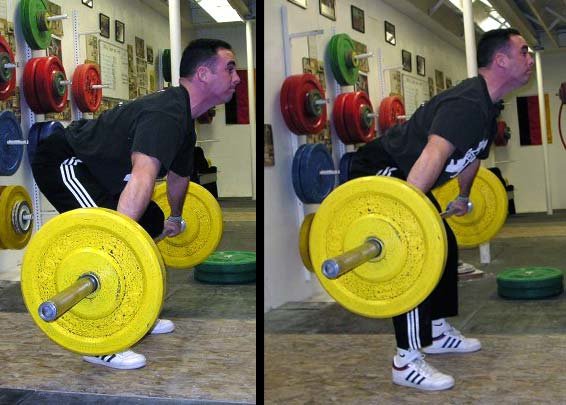
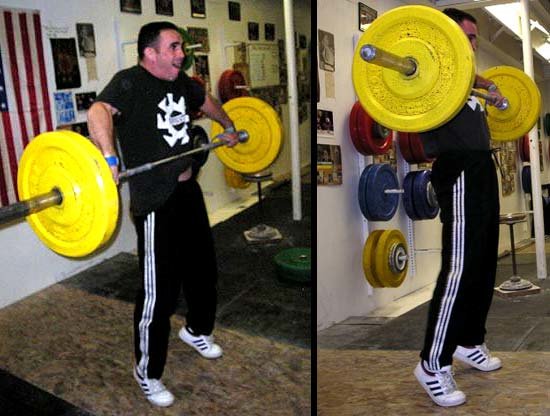
Snatch Hang High Pull

Snatch Hang High Pull

Exercise Data
Main Muscle Worked: Traps
Other Muscles Worked: Biceps, Lower Back, Forearms, Hamstrings, Calves, Abdominals, Shoulders
Equipment: Barbell
Mechanics Type: Compound

Video Guide: Windows Media - MPEG - Video iPod

Tips: These are just like the Power Clean except that you start from a hanging position and you do not catch it at the top. Check out the Power Clean for more info.

Read more...

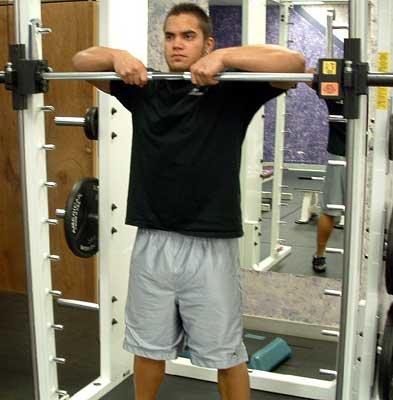
Machine Upright Row

Machine Upright Row

Exercise Data
Main Muscle Worked: Traps
Other Muscles Worked: Biceps, Shoulders
Equipment: Machine
Mechanics Type: Compound

Video Guide: Windows Media - Real Player

Tips: Same as the Upright Barbell Row but with a Machine.

Read more...

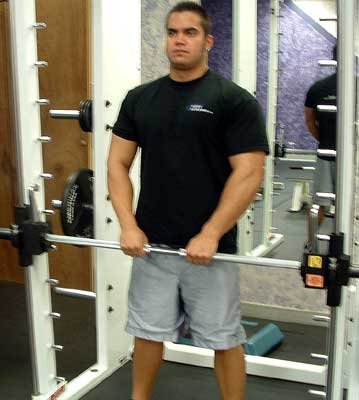
machine shrug

Machine Shrug

Exercise Data
Main Muscle Worked: Traps
Other Muscles Worked: None
Equipment: Machine
Mechanics Type: Isolation

Video Guide: Windows Media - MPEG - Video iPod

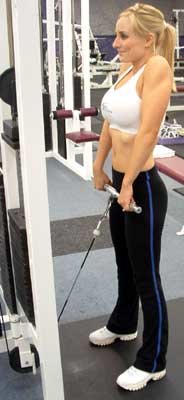
Tips: Stand grasping Smith bar with shoulder width or slightly wider overhand grip. Disengage bar from the rack. Elevate shoulders as high as possible. Lower and repeat.

Read more...

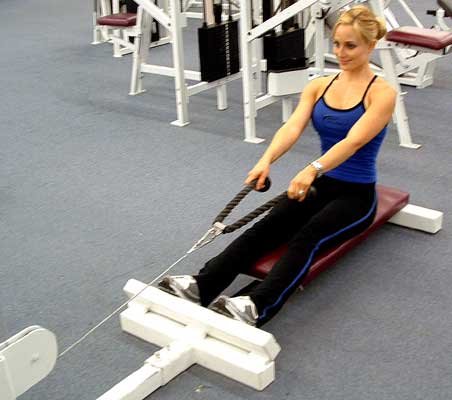
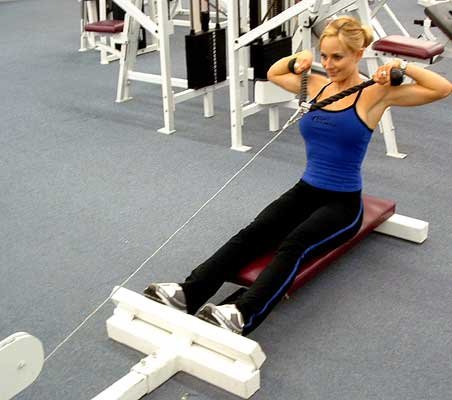
Low Pulley Row To Neck

Low Pulley Row To Neck

Exercise Data
Main Muscle Worked: Traps
Other Muscles Worked: Biceps, Middle Back, Shoulders
Equipment: Machine
Mechanics Type: Compound

Video Guide: Windows Media - MPEG - Video iPod

Tips: This is like a seated row but you use a rope handle and pull to your neck. Sit at a seated row station and grab the ends of the rope using a palms down grip. Sit with your knees slightly bent and your back straight. Your back should be almost completely vertical... do not lean back! Keeping your back in the same vertical position, pull the rope back and up to neck height. Your elbows should be out, away from your sides. Return slowly to the starting position.

Read more...

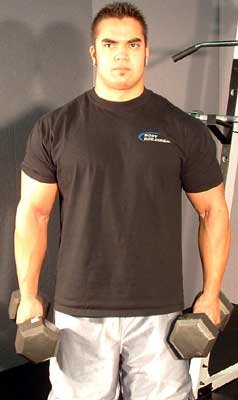
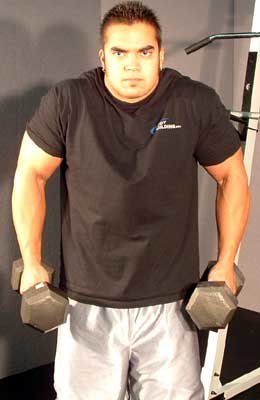
Dumbbell Shrug

Dumbbell Shrug

Exercise Data
Main Muscle Worked: Traps
Other Muscles Worked: None
Equipment: Dumbbell
Mechanics Type: Isolation

Video Guide: Windows Media - Real Player

Tips: Stand straight up with your feet at shoulder width. Hold two dumbbells with your arms hanging at your sides. Droop shoulders down as far as possible. Raise shoulders up as far as you can go. Then slowly return to the starting position. You can also rotate your shoulders by going up in a circular motion from front to rear and then back down. Can also be done holding a barbell instead.

Read more...

Dumbbell Incline Shoulder Raise

Dumbbell Incline Shoulder Raise

Exercise Data
Main Muscle Worked: Traps
Other Muscles Worked: None
Equipment: Dumbbell
Mechanics Type: Isolation

Video Guide: Windows Media - MPEG - Video iPod

Tips:

Preparation:
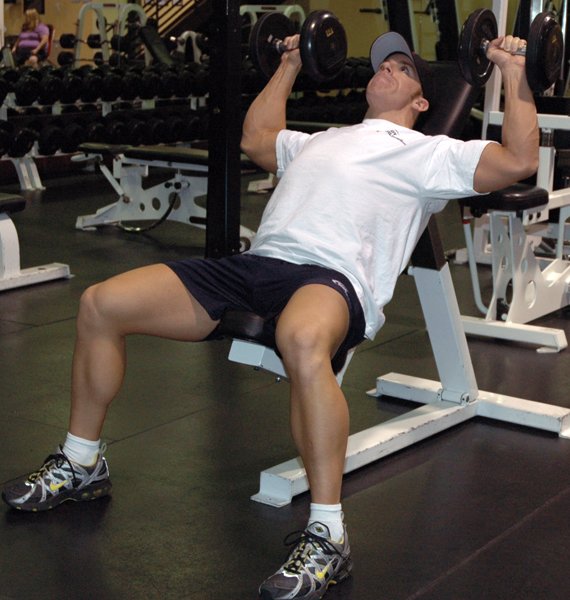
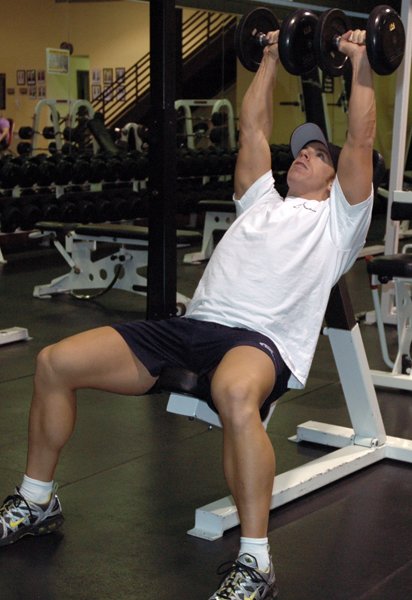
Sit down on an incline bench with the dumbbells resting on your lower thigh. Kick the weights to your shoulders and lean back. Position the dumbbells above your shoulders with your elbows extended.

Execution
Raise your shoulders toward the dumbbells as high as possible. Lower shoulders to bench and repeat.

Read more...

Calf-Machine Shoulder Shrug

Calf-Machine Shoulder Shrug

Exercise Data
Main Muscle Worked: Traps
Other Muscles Worked: None
Equipment: Machine
Mechanics Type: Isolation

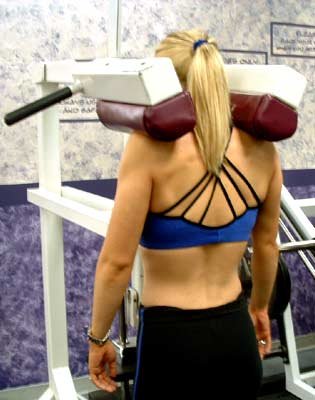
Tips: This is a great way to work your traps and avoid having to hold dumbbells or barbells, which can be hard on your arms or wrists. Position yourself on the calf machine so that the shoulder pads are above your shoulders. Put your hands on your hips. Raise your shoulders up towards your ears and hold it for a full second. Slowly return to the starting position and repeat. You can change your shoulder position (bending over a little) to hit the traps from different angles.

Read more...

Cable Shrugs

Cable Shrugs

Exercise Data
Main Muscle Worked: Traps
Other Muscles Worked: None
Equipment: Cable
Mechanics Type: Isolation

Video Guide: Windows Media - MPEG - Video iPod

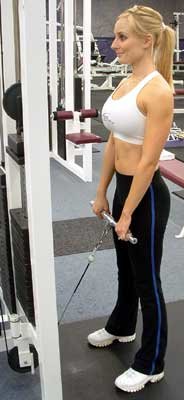
Tips: Grasp cable bar that is attached to the low pulley with a shoulder width or slightly wider overhand grip. Stand close to pulley. Elevate shoulders as high as possible. Lower and repeat.

Read more...

Barbell Shrug Behind The Back

Barbell Shrug Behind The Back

Exercise Data
Main Muscle Worked: Traps
Other Muscles Worked: None
Equipment: Barbell
Mechanics Type: Isolation

Video Guide: Windows Media

Tips: Hold a barbell behind your back with your palms facing backwards. "Shrug" your shoulders upward as high as you can and squeeze it for a second. Then lower the bar all the way down as far as you can. To get the barbell into position, you can rest it on a power rack or bench and then pick it up from there. You can also do these with dumbbells.


Read more...

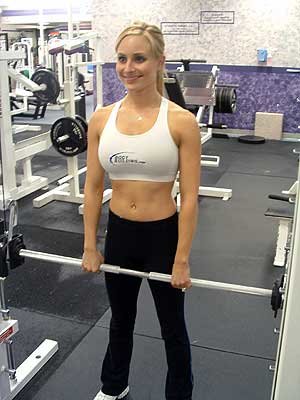
Barbell Shrug

Barbell Shrug

Exercise Data
Main Muscle Worked: Traps
Other Muscles Worked: None
Equipment: Barbell
Mechanics Type: Isolation

Video Guide: Windows Media

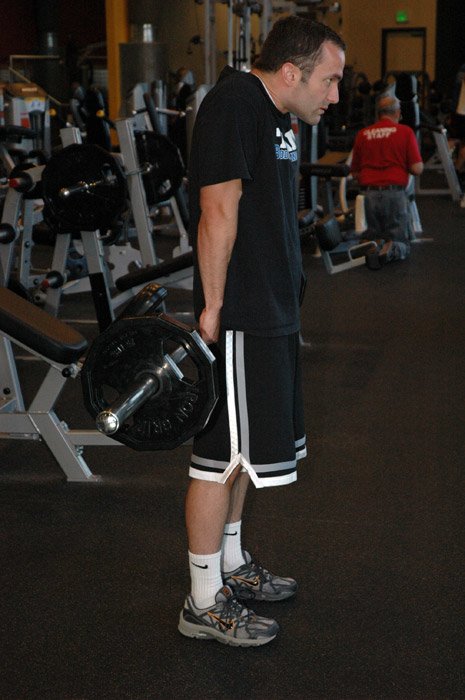
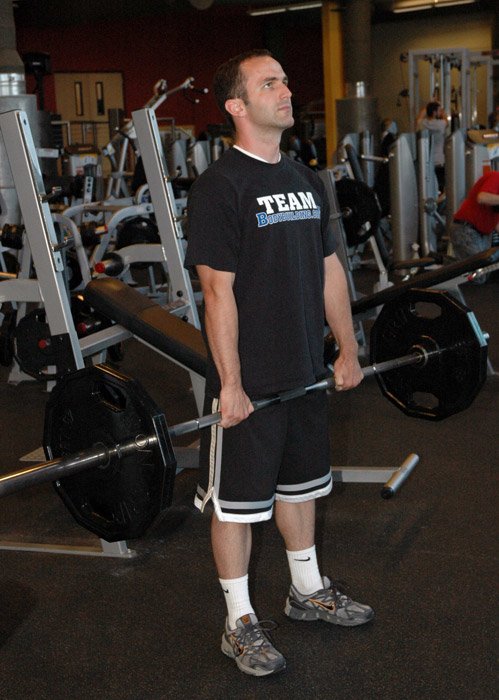
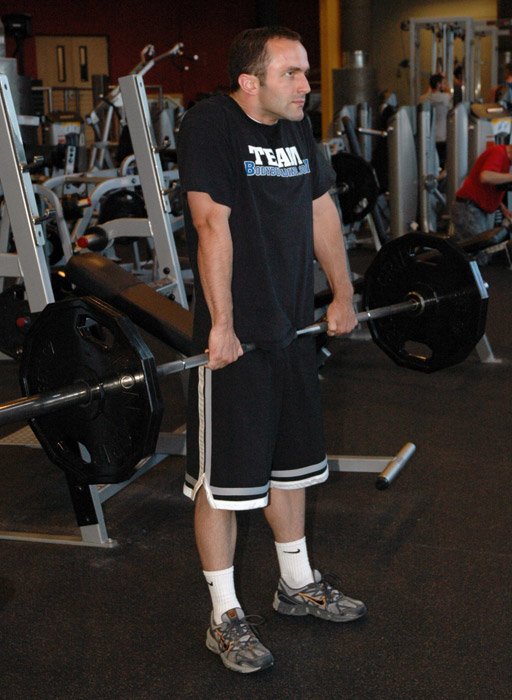
Tips: Hold a barbell with both hands in front of you with your hands a little wider than shoulder width apart. Keep your feet at shoulder width. Stand straight up with the bar hanging at arms length. Droop shoulders down as much as possible to start. Raise your shoulders up as far as you can go. You can also rotate your shoulders as you go up, going in a semicircular motion from front to rear. Then slowly return to the starting position. Can also be down with dumbbells.

Read more...

Pushups

Pushups

Exercise Data
Main Muscle Worked: Chest
Other Muscles Worked: Triceps, Shoulders
Equipment: BodyOnly
Mechanics Type: Compound


Video Guide: Windows Media - MPEG - Video iPod

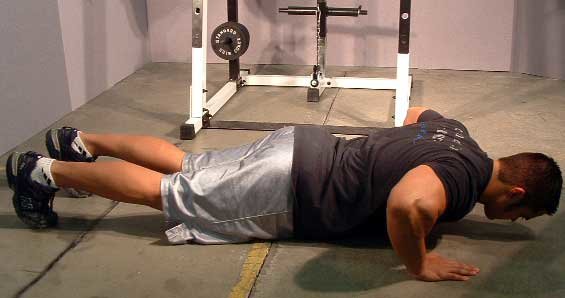
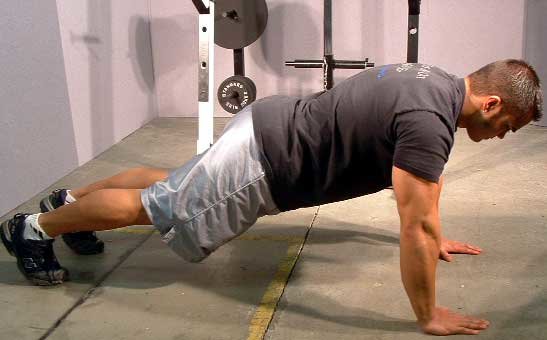
Tips: Kneel down on the floor and place your hands flat on the floor and slightly wider than shoulder width apart. With your shoulders directly over your hands, straighten your arms. Move your feet back, placing your toes on the floor, so that your knees are off the floor and your legs are straight. At this point, your body should form a straight line from your shoulders to your ankles. Your body should remain straight throughout this exercise. Keep your head and neck in line with your body so that your are looking down toward the floor. This is the starting position. In a controlled fashion, lower your body down toward the floor, bending your elbows, until your body is nearly touching the floor. Now, push your body up away from the floor, straightening your arms, until you have returned to the starting position. If you need to reduce the intensity of this exercise you can perform the pushup from your knees.

Read more...

Dumbbell Flyes

Dumbbell Flyes

Exercise Data
Main Muscle Worked: Chest
Other Muscles Worked: Triceps, Shoulders
Equipment: Dumbbell
Mechanics Type: Compound


Video Guide: Windows Media - Real Player

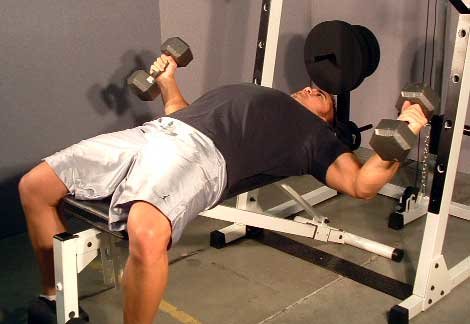
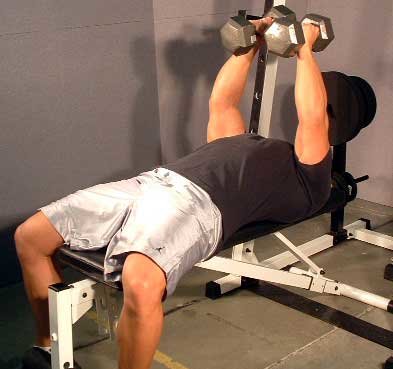
Tips: Sit down on a flat bench with a dumbbell in each hand. Then lie back, keeping the dumbbells close to your chest. Lift the dumbbells over your chest by extending your arms. Maintain a slight bend in your elbows. Keep your hips and shoulders flat on the bench and your feet on the floor. Lower the dumbbells to the sides of your body in an arc-like motion. At the lowest point, your bent elbows should be on a horizontal plane even with the bench. Slowly bring the weights back up over your chest in an arc. The bend in your elbows should stay the same throughout the exercise.

Read more...

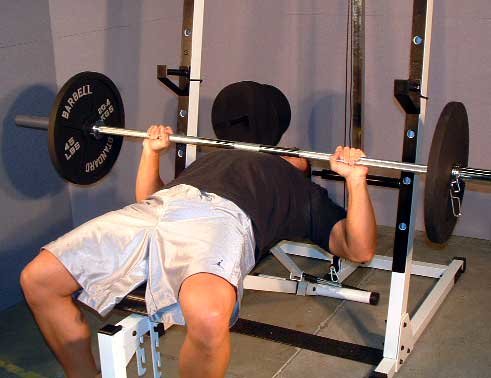
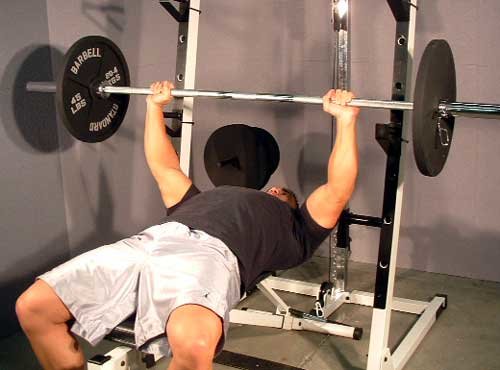
Barbell Bench Press - Medium Grip

Barbell Bench Press - Medium Grip

Exercise Data
Main Muscle Worked: Chest
Other Muscles Worked: Triceps, Shoulders
Equipment: Barbell
Mechanics Type: Compound


Video Guide: Windows Media - Real Player

Tips: Lie on a flat bench and firmly position your feet flat on the floor a little more than shoulder width apart. Keep your back flat on the bench! Using a grip broader than shoulder width, hold the barbell above your body, then lower slowly to the middle of your chest. Without bouncing the weight off your chest, drive the barbell up over the middle of your chest until your arms are straight and your elbows are locked. Lower the bar down slowly.

Read more...

chest work out tips for beginers

Everyone want to have a good looking Chest muscles as it is considered as one of the sexiest muscle group in the body. But there seems to be a lot of confusion in people, especially in the beginners mind about how exactly to develop a full balanced chest.

Do not worry, I will tell you how to build a beautiful and a sexy chest by using these exercises:

1. Bench Press- The bench press is one of the useful workouts that help in building a good looking chest especially the major muscles of the chest that is the shoulders and triceps. Perform a basic bench press by bending elbows at 90 degree angles. Remember that heavy benching is not the only way to build a chiseled chest but there are other exercises too.

2. Stretches- Stretch your chest muscles frequently. By doing so, you will improve your flexibility and it will help you to avoid injuries.

3. Push ups- Push ups are one of the awesome exercises that help in building a sound fitness foundation. Push ups works for almost every muscle in the body. They are important to a fitness regimen for developing general body strength, and core body strength. Doing Pushups will help you to avoid back injuries and will also throw in a good posture.

4. Upper Chest Workouts- Some of the awesome upper chest workouts are Incline bench dumbbell press, declined push-up, incline dumbbell flyes, exercise ball inclined push-up and incline barbell bench press. Include these exercises in your daily workout program.

5. Lower Chest Workout- While performing lower chest workout keep your abdominal muscles tight, shoulders down and chest up. Some of the Lower chest workouts are decline dumbbell flyes, wide grip decline barbell bench press, decline barbell bench press and exercise ball push-up.

6. Common Chest Exercises- There are several chest exercises to focus on. But here are some of the common chest workouts which include dips, push-ups, barbell bench press, cable crossovers, dumbbell pullovers, smith machine bench press, single arm dumbbell, free motion cable crossovers, isometric chest presses, and single arm dumbbell.

7. Warm ups- Begin each exercise with warm up. This allows your muscles to wake up and start receiving the blood they require. It is very important to warm up as it avoids injuries and helps you to do a better workout.

Do not move up and down in a jerky or uncontrolled manner, as these exercises can place considerable stress on body. And do not change your routine too often and confuse your body muscles. Following these steps will surely give you a better result.

Remember: Beginners must choose only 1-2 exercises per day to avoid stress and injuries.

Read more...

how to strengthen your shoulder muscle

>> Thursday, November 13, 2008

The following exercises show examples of moves targeting the shoulders -- the front, middle and rear deltoids as well as the rotator cuff muscles. Choose a variety of exercises to target each part of the shoulders for a well-rounded routine. Click on the pictures and links to view detailed instructions or to see a larger picture. To work these exercises into a routine:

  • Beginners: Choose 1 to 2 exercises, 1 to 2 sets of 12 to 16 reps
  • Inter/Adv: Choose an exercise from each column for 2 to 3 sets of 8 to 12 reps, resting between sets
  • UUse enough weight that you can ONLY complete the desired number of reps
Overhead Presses
Overhead presses work the major muscles of the shoulder, with a focus on the middle deltoid and tricep. To do a basic overhead press, stand (or sit) holding weights with elbows bent and hands at eye level. Push weight over head without arching the back and lower back to start.
Front, Side, Rear Raises
Front, side and rear raises target each part of of the shoulders as well as the upper back. When doing shoulder raises, only lift the weight up to shoulder level. When doing rear flies, lead with the side of the hand and imagine you're making a smiley face as you lift the arms up.
Rotations/Upright Rows
Shoulder rotations work the rotator cuff and usually require smaller range of motion and light weight to avoid injury. Upright rows work the middle deltoid as well as the upper back and bicep muscles. If you have shoulder problems, you may want to avoid these exercises.
Overhead Press
Front Raise
External Rotation
Overhead Press with Dumbbells
Lateral Raise
Internal Rotation
Arnold Press
Rear Lateral Raise
Upright Rows

Read more...

About This Blog

Lorem Ipsum

  © Blogger template Palm by Ourblogtemplates.com 2008

Back to TOP